• Brian Richards
    Information
  • Blog
    Thoughts and Ideas
  • Collection
    Curated Musings
  • Subscribe to our RSS feed Contact me at brand@brrltd.com
Brian Richards | Brand Strategist
  • Understanding the psychology of fashion is the marketing genius that defines success.
    Brian R Richards
    15th May 2012
  • FIFA's All Powerful Brand Is No Longer Infallible.
    Brian R Richards
    10th May 2012
  • Stories in the heart. Stories which make a nation.
    Brian R Richards
    2nd May 2012
  • Checking Jeremy's Underpants: Icebreaker's Brand Review
    Brian R Richards
    23rd April 2012
  • PsychologyOfFashion 01
    PsychologyOfFashion 02

    You don't buy clothes - you buy an identity.

    The model struts towards the battery of cameras, profile held slightly aloft, walking with the curious avian gait that has evolved to flatter the lines of the dress. She does not spare a glance for us mere mortals in the wings; her attention is actually focused on the arsenal of lenses at the end of the catwalk which will click the image into the media an instant after she has turned away.

    For most of us, the model’s short stroll is the first image that springs to mind with the mention of the word fashion. The runway show, with its combination of creativity, glamour and artifice, is one of the elements that drive us, again and again, to buy clothes we don't really need. It's difficult to think of an industry that does not have recourse to marketing, in one form or another, but only fashion has such an overbearing reliance on it.

    When clothes leave the factories where they are made, they are merely garments or apparel. Only when the market has got hold of them do they magically become fashion. Even when you say you're not interested in fashion, you've been forced to confront it. Fashion is everywhere. What you choose to wear, or not to wear, has become a political statement. You don't buy clothes; you buy an identity. This identity is inherently linked to the brand's values. These values are communicated via marketing; are you flighty, debonair, streetwise, intellectual, sexy….? One thing is certain; fashion, even at the top of the scale, is increasingly about business.
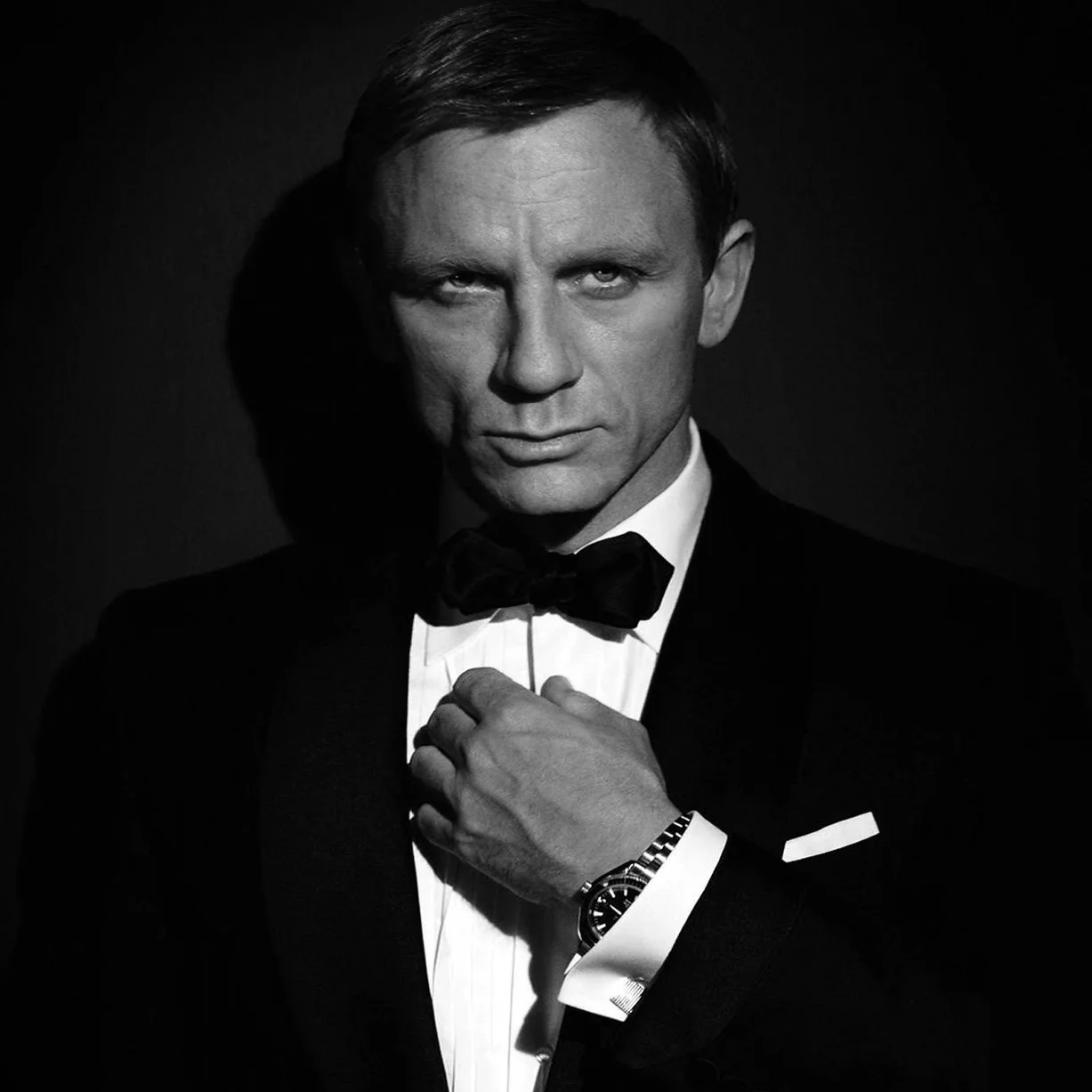
    This identity should be linked to the brand's values. They should be communicated via marketing; are you flighty, debonair, streetwise, intellectual, sexy...?

    Designers are admirably creative people, but they work for an ever-shrinking number of global conglomerates. There cannot be many creative professions in which you are expected to prove your talent with a large body of work at least every six months. For those outside the industry, it's probably easier to be cynical about fashion than it is to be admiring. The words of fashion and marketing are virtually interchangeable. Yet a fashion brand cannot expect to thrive on marketing alone.

    Consumers, happily, just aren't that dumb. Marketing can persuade a customer to push open the door of the shop, but if the clothes they find inside are ugly, they will leave.

    Today, the product and any level of service must achieve the correct balance between price, quality, creativity and wearability. Fashion consumers, we would argue, are the most sophisticated of all shoppers. Fashion already relies on a complex array of barely perceptible signs and symbols - the width of the lapel, the height of a boot - so the imagery behind it cannot afford to be primitive. Today’s best fashion advertising barely resembles advertising at all. The most effective marketing campaigns are carried out under the radar; the target is unaware of the ruse until it is too late, or is so appreciative of its shrewdness that they agree to accept the come-on.

    Every shopper has become a professional. They are beginning to resemble those who work in the industry. When you meet people from the fashion industry, and you work with them, one thing strikes you: none of them are particularly fashionable themselves. They are more often stylish, but there is never the slightest hint of the victim about them. It seems they understand the system so perfectly that they refuse to get caught up in it. Increasingly the customers are beginning to think the same way.

    The days when consumers were loyal to brands are long gone. Nobody wants to be decked from head to toe in clothes from the same source, especially if they are smothered in logos. Small “curated” stores selling unusual but multiple brands, along with other lifestyle accoutrements, will become much more common in the future. Consumers don't just buy designer, or chain stores or vintage. They buy all three and throw them together in a style that is uniquely personal. As stylists themselves, consumers are pushing for more choice in the faster turnover of products. Fabrics and designers are becoming more innovative, even at the low end of the market.

    The quest for originality is also prompting the return of couture and personal tailoring, but in a more democratic form. Women want to participate in the creation of an ensemble with the sales assistant. They like being part of the creative process. Fashion is all about the alter ego; who do I want to be today, without the why. It is that instant 30 seconds in front of the wardrobe, the mental picture of the occasion and mood, which makes a woman, reach into her heart and choose the garment that will define her person for that day.

    Understanding the psychology of fashion is the marketing genius that defines success.

    —
    Image Credits:

    Pull The Metal, Twenty Seven Names, Vision Magazine

  • FIFAAllPowerfulBrand 2
    FIFAAllPowerfulBrand 02

    FIFA's all powerful brand is no longer infallible. Like the Catholic Church they believe in one holy apostolic FIFA.

    FIFA, the world football's governing body is often very directly associated with Switzerland, partly because Sepp Blatter, who is Swiss, leads it, and because it has been based in Zürich since 1932.

    In a recent ethics hearing Blatter flatly denied bribery allegations, “…absolutely no wad of money given, ever, do I make myself clear?” he said. However, hidden cameras set up by Sunday Times reporters posing as representatives of the US 2022 bid caught them out. There's an odour in light of the conduct of many of its officials now seeping under its doors into Swiss political circles, where questions are being asked regarding the federation’s financial affairs. With a significant list of corruption evidence and allegations, the file held by judicial authorities in the Canton of Zug provides evidence of dubious practices.

    I visited their headquarters and was a guest in their exclusive restaurant a few years ago. I was staggered by the magnificence of the $200 million building, with only two of its floors above ground - they are certainly well dug in, high above Zürich Berg.

    Now at this Vatican of football, Blatter and his Cardinals are not dissimilar to the supremacy of Rome. However, like the real Holy Father, his own infallibility is now coming in for severe criticism. 

    The more I read on FIFA and its fantastic global brand being tarnished, I can't help but draw the parallel with the pomp and ritual of Rome. FIFA sanctions anyone who does not adhere to its rules. Like the Catholic Church they believe in one holy apostolic FIFA.

    Every male, female and junior footballer, and also every football match in the world, is governed by FIFA, with the exception of fun tournaments and matches in alternative leagues. When accepting their licences, all footballers recognise the authority of FIFA and agree to refrain from going to ordinary courts over football related disputes. Like the Catholic Church, FIFA sanctions anyone who does not adhere to her rules.

    FIFA sanctions anyone who does not adhere to its rules.

    FIFA has monopolised a human passion loved by millions and exploits it for commercial purposes. You have to marvel at its power and ability to manipulate its network across the globe into a kind of religion with its own special cause.

    It generates annual revenue of approximately US$1.4 billion through the sale of television and marketing rights for football World Cup Tournaments. 

    The salary bill in 2011 was US$67.3 million for 390 employees - an average of US$172,677, which seems terrific if you're the humble doorman or secretary on the front desk. Other employee benefits costs tallied more than US$21 million. On top of all of this, a bonus of US$29.5 million was paid for key management personnel defined as members of the 24-person executive committee.

    Martin Luther (Christanity's first brand manager), a monk from Wittenberg in Germany, began to criticise the power and corruption of the Catholic Church (and its brand) in 1517. He said it was unfair of the Pope to stop translations of the Bible as ordinary people couldn't read Latin and they had to rely on their priest to tell them what it meant. Pardoners with the Pope's permission traveled throughout Europe selling indulgences. They said all you have to do was buy one and you could pay for forgiveness. Even for someone who had already died you could buy your loved one a ticket to heaven, from wherever they were in the meantime. If you ever get to Rome you will undoubtedly be rendered speechless at the magnificence of St. Peter's; it defies all budgets I have ever cited in my humble world of marketing. So they certainly knew how to exploit a monopoly on Christianity at the time, in much the same way as FIFA today.

    The federation’s financial affairs generates billions in revenues, provides hardly any services, pays virtually no tax because of its not-for-profit status under Swiss law, and is seen as a sanctuary for corruption. An anti-corruption campaign launched by FIFA itself last November has failed to prove convincing. At a governing body conference in March, Blatter vowed it would change the way it investigates corruption. He seems quite able to neither hear, see, nor speak no evil.

    Blatter personally has attracted criticism from the media, senior football figures and players, due to several controversial statements. These include suggesting that female football players should wear tighter shorts to appear more attractive to men, that Latin American countries would applaud John Terry for having an extramarital affair, that homosexuals should refrain from any sexual activity while attending the 2022 World Cup in Qatar, and that on-field racism could be corrected with a handshake.

    Its ethics committee has failed to gather sufficient evidence themselves to prosecute a number of allegations of vote rigging during the 2018 and 2022 World Cup bidding contests, which was a glittering affair and a great disappointment for many, resulting in favor of Russia and Qatar. The enormous tournament in 2022 in the world's richest absolute monarchy will be an interesting spectacle, and one where the money is apparently already flowing. Qatar has a population of 300,000 and is where people survive quite nicely on a tiny stretch of very hot sand.

    Still, under Sharia law, I'm not sure how the football fans and perhaps the more loutish element will cope with the limits on lager, and the threat of a potential flogging or stoning. I expect money will change hands in all directions behind the tent in true FIFA style.

    After all FIFA's Brand tagline is “For the game. For the world”.

    _

    Image Credits:
    Reuters, ITN Source, Swiss Review, NBC

  • StoriesInTheHeart1
    StoriesInTheHeart2

    Stories carved in our hearts and not stone. The permanence of who we are should not be carved in stone, but rather in our hearts, with all of us participating in the national story.

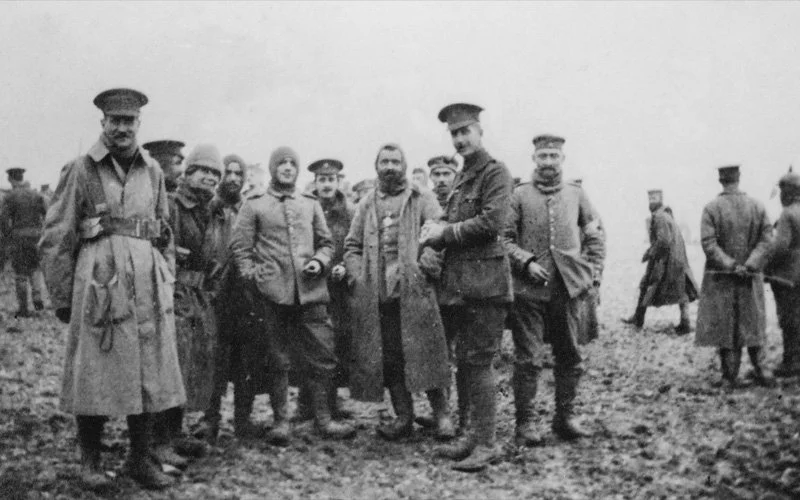
    There was a young Indian family standing beside us at the dawn ceremony on Wednesday and I couldn't help but think what did it mean to them. After all, their ancestors probably had nothing to do with the military debacle at Anzac Cove in April 1915. As the beautiful clear sky lightened against the blood red War Memorial Museum I began to notice many cultures around me in effect defining what New Zealand is increasingly about. With their little ones hoisted on their shoulders, we all stood silently listening to a lone bugler, and in our own ways, to our own gods, thanked those long dead soldiers from the bottom of our hearts for their sacrifice.

    Here great suffering was caused to a small country by the loss of so many of our young men. But, the Gallipoli campaign showcased attitudes and attributes - bravery, tenacity, practicality, ingenuity, and loyalty to King and comrades. It helped New Zealand define itself as a nation.

    Stories carved in our hearts and not stone. The permanence of who we are should not be carved in stone, but rather in our hearts, with all of us participating in the national story.

    We gained a great mutual respect for our trans-Tasman friends, which formed the basis of close ties, which continue today. Like all stories they do have sad chapters and this unquestionably was one of our saddest. Nevertheless the book needs to be read from cover to cover with all its tensions of opposites.

    The little children standing with parents who were probably born elsewhere suggested to me that they probably have their own war stories every bit as horrific as ours. From Vietnam, Cambodia, Laos, Sri Lanka, Eastern Europe and beyond, I couldn't help thinking that for them this solemn dawn ceremony perhaps represented a new hope from whence they came to this young country – one which has in fact the word “New” in its name.

    There is a danger that by clothing real historic events in a thick coat of myth and cliché that we will lose touch with the experience of those involved and its significance. History is the means by which we understand who we are, and the basis on which we make the judgment that determines our future.

    The recent earthquakes in Christchurch have resulted in many lost lives and much sadness, and remind us of the impermanence of structures such as the destruction of the city’s beautiful Cathedral built in 1858. The resilience of New Zealanders and the people of Christchurch is such that they're happy to build a “cardboard” Cathedral, which will last 20 to 30 years, in that spirit of ‘can-do’ renewal. A kind of “let's get on in the meantime” attitude.

    The Japanese architect Shigeru Ban's contribution comes from a person whose country has been devastated itself by recent nuclear and natural disasters. Here we see the indomitable spirit of the Japanese as they climb out of their own darkness by being held together by their stories.


    The permanence of who we are should not be carved in stone but rather in our hearts with all of us participating in the national story. It is a matter for each and every one of us New Zealanders to understand and contribute our own little piece of the story. To feel included, to feel appreciated. Chilling reminders of how fragile we are and how much we need each other in such times. It's a rich and ever unfolding story, which helps us to stand together.

    Stories of those things that entertain us and teach us how things are, how things came to be, and most importantly stories of what we could become. They teach us how to live. How to be thankful and even happy to go forward on such somber ANZAC mornings.

  • JeremyUnderpantsImage01 1
    JeremyUnderpantsImage01 2

    Stripping things back to the bare essentials and maintaining your Brand’s “Ewephoria”.

    I think all of our mothers insisted we shouldn't leave home without clean underwear and somehow it's an appropriate “Ewephemism” for a wonderful day I spent in Wellington last week revisiting an old brand project to do with sheep. I was bouncing off the ropes with Jeremy Moon the founder of the Icebreaker Brand and some of his very capable senior team going over carefully the brand ethos and stripping it right back to its underwear.

    This tension of opposites
    is in fact the complete organising idea behind
    the brand and its
    wonderful story

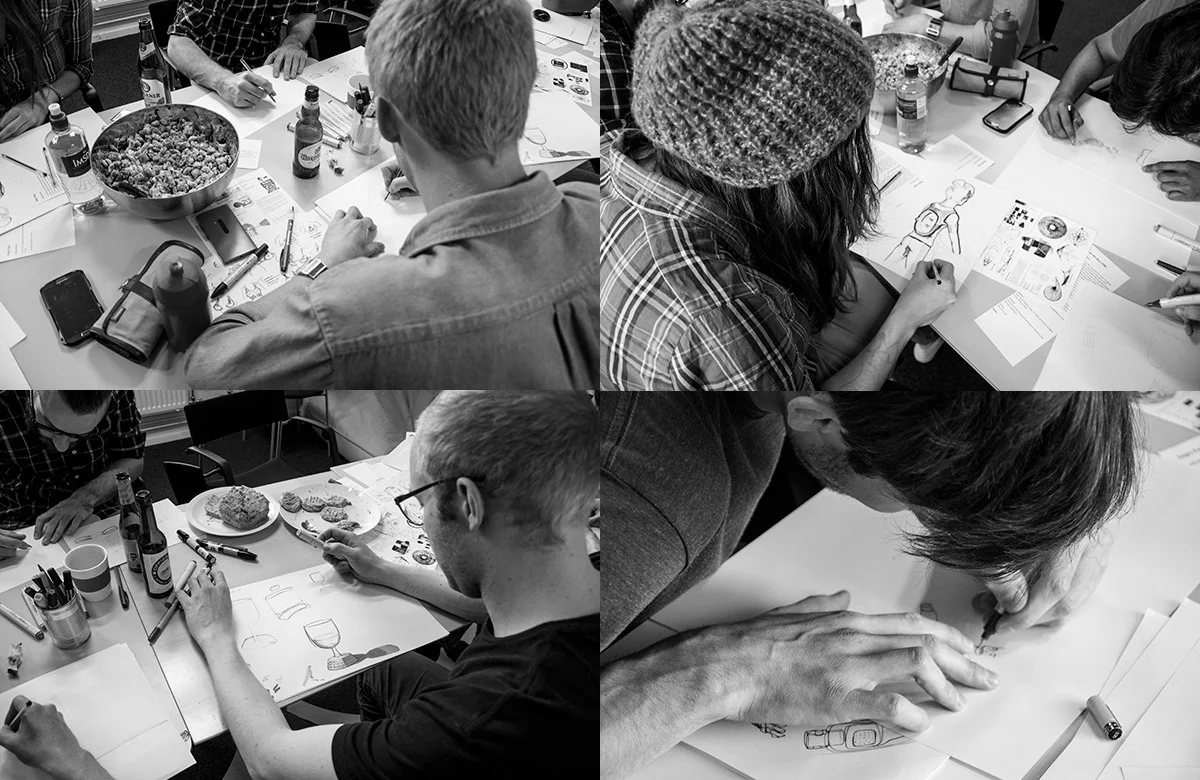
    It's been 17 years since we scratched out the strategy together on a table napkin. At the time the expression “A Kinship with Nature” seemed wimpish. We both agreed at the start that the soul of the brand was less about wool and more about nature's cleverness in producing such an elegant solution of insulation against the elements. At that time we predicted that the more people were removed from nature the more they were prepared to pay for it and we unashamedly pitched the product at a high price aimed at the urbanites of the world who are desperate to touch nature in some way. 

    This tension of opposites is in fact the complete organising idea behind the brand and its wonderful story. Scripting the story and telling it in an intriguing way has been at the heart of positioning the product. Together with a transparent and ethical supply chain the company has become the world’s expert in Merino.

    My first encounter with Jeremy and his piercing questions hasn't changed in all those years and I love the intellectual scrap we have each time we discuss the brand. No other client challenges me to the same degree and each encounter sees both of us sizing each other up and dancing round the ring fighting for our respective ideas. We each present a view and try to get the other to own the silence. It’s an old trick to under-cook the argument and hope your opponent will finish the point in full agreement. Jeremy’s never fallen for this and he’s got a whole lot better at interrogation, which requires me to get up a lot earlier in the morning and be on my game.

    He's matured a great deal in the time I've known him. From the ex- student I first knew whose idea of sensory perceptions was at the time probably not much more than a quick breathless shag on a sofa in a Dunedin student flat to telling beautifully appealing adventure stories in the glamour spots of the world such as St. Moritz and New York. Both of us share excellent memories, and it was amusing to see some of the senior team looking strangely at odds with the one-liners we had exchanged over the years in the brand’s development; from Denise Diderot’s dressing gown to Deepak Chopra.

    These days I see so much “mud at the wall marketing” and it's so pleasing to see Jeremy's desire to address the brand’s founding ethos again as the company chases the second $100 million.

    Recapturing the soul of the brand and reinstating its values are critical to its future success. Like icebergs they can drift and melt away and what is below the water is often where the real substance is. So few companies have the courage to do this and fail to keep the scraps of paper, causing endless brand iterations and drifting usually into category oblivion.

    Strangely at the end of the review of all of the material around the room we concluded that we haven't strayed much from the humble scrap of paper over the years. The only new dimension going forward was the impact of technology and our ability to grow the community of Brand lovers in a much more personalised way. 

    So I'm pleased to report after an exhausting intellectual debate (and an excellent dinner) we put our gloves away and agreed “Ewenaminously” that Jeremy's Brand underpants didn't need changing. He just needs to ensure that everyone in the company wears the same model and feels as “Ewephoric” as he does.